The case for a verified construction workforce
Software alone doesn't formalize construction. Verified identity, recorded attendance and a reputation that travels do. Here's why verification comes first.
Ask a site manager what slows a project down and you rarely hear "software". You hear about the crew that didn't turn up, the timesheet nobody trusts, and the argument on payday about who worked which days. Those are problems of trust, and more software on top of them only moves the argument to a screen.
Verification is different. It settles the questions everything else depends on: who this worker is, what they can do, and whether they were really on site. Once those answers are recorded, the rest of the work gets easier for everyone.
What does a verified workforce actually mean?#
A verified worker is someone whose profile is built from things that can be checked, not from claims. On Buildpal that record has four parts:
- Identity, verified in levels. A worker starts with the basics and unlocks more as each step is confirmed.
- Trade and skills, described exactly. A carpenter who also does formwork is shown as exactly that, not as general labour.
- Certifications with expiry dates, so nobody works on an expired ticket by accident.
- Work history from real bookings: attendance, completions and cancellations, recorded as they happen.
None of it needs a smartphone. Every worker has a profile, whether they use the app or a basic phone over USSD and SMS.
Why isn't software enough on its own?#
Most construction software assumes the data going in is true. On a busy site it often isn't. A register filled in at the end of the day, a spreadsheet updated from memory, a phone passed around the gate: each one looks like a record and none of them is evidence.
The hard part was never the spreadsheet. It was knowing who was actually on site.
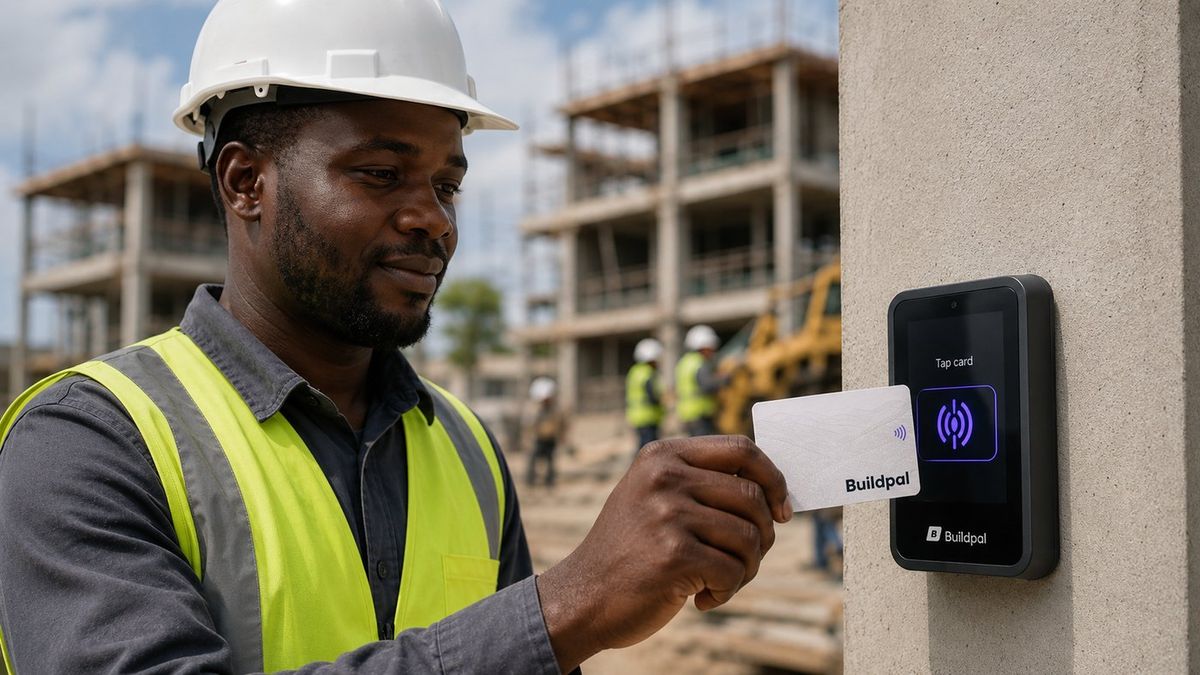
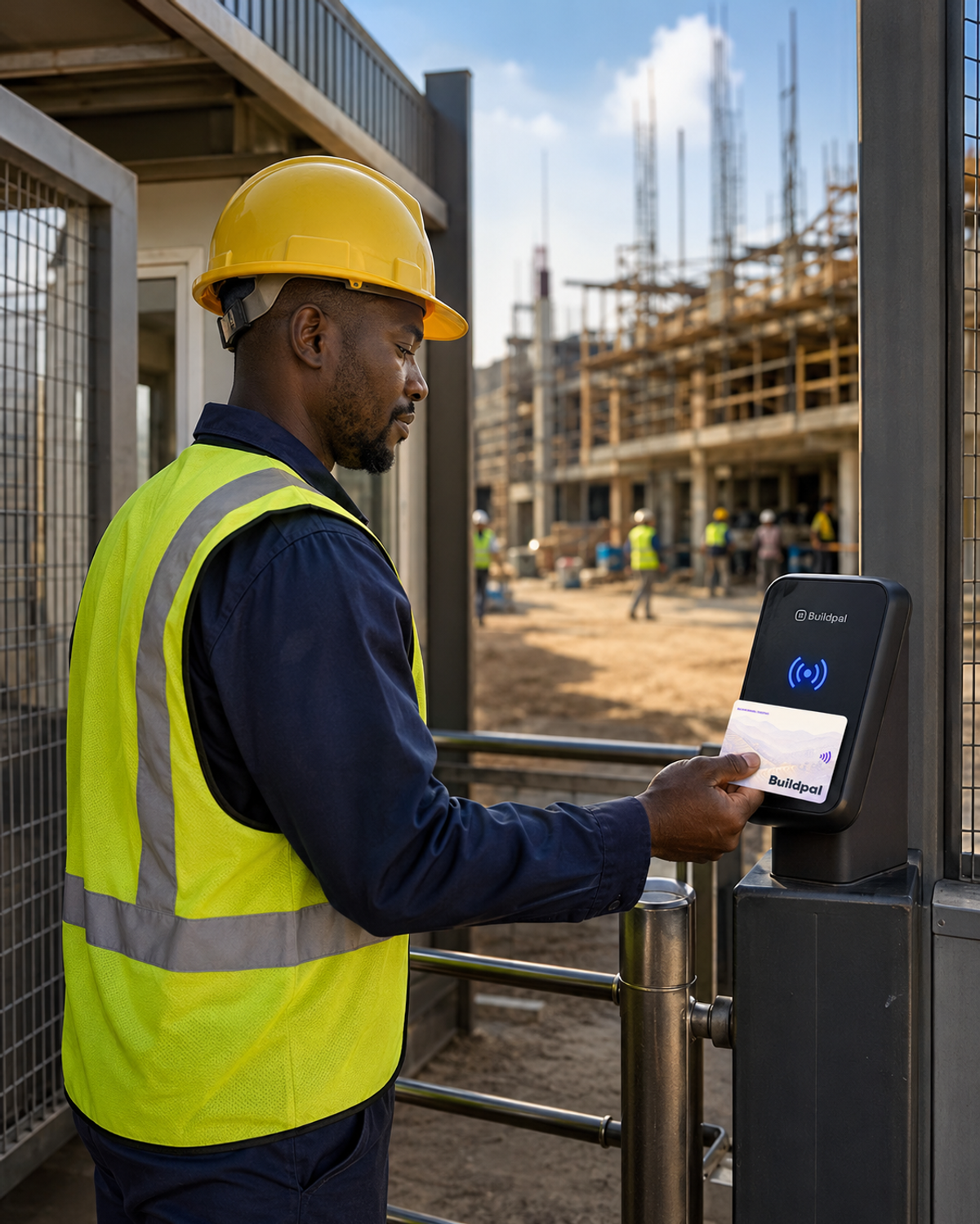
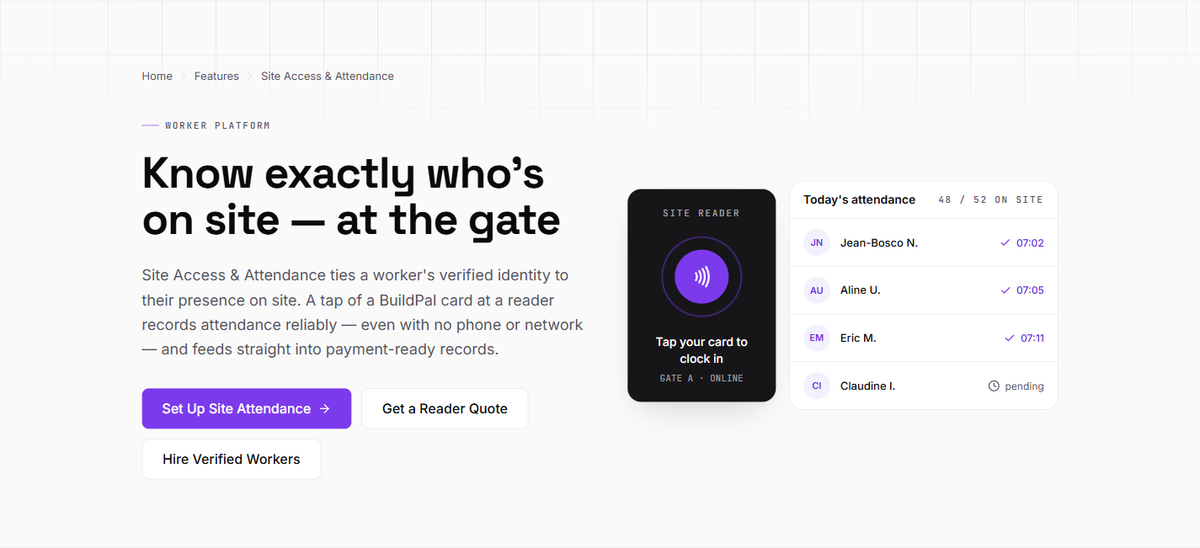
Verification fixes the input. When a worker taps their Buildpal card at a reader, the record says who, where, when and which way, and the reader tells the worker straight away if something is wrong.
How does verification change a day on site?#
The first change is speed. A contractor describes the work, and the platform offers it to verified workers who meet the requirements, in a fair order. Trust is settled before the first morning, not argued about after it.
The second change is calm on payday. Pay is calculated from recorded attendance, so the conversation starts from the same evidence on both sides.
What do workers get out of it?#
A record that belongs to them. Reliable work builds a reputation that follows a worker from site to site, and it feeds both the work they're offered and what they earn. You can read more on the page for workers.
No. Every worker has a profile whether or not they own a smartphone. The Buildpal card works at the gate, and USSD and SMS cover basic phones.
No. Tiers are a record, not a rank of skill. A Tier 4 carpenter is a more proven one, earned on reliability and attendance.
Not yet. Rwanda is our first market, and it's where everything described here runs today.
Verification isn't the whole story of formal construction, but it's the first chapter. See how it works end to end on the Worker Platform page.

Product, field operations and engineering at Buildpal, writing about what we learn building a verified workforce for construction in Rwanda.
Comments (0)
No comments yet. Start the conversation.