Formalization as opportunity, not paperwork
Formal construction is often sold as forms and fees. On a real site it looks different: a record workers own, rates that are published, and fewer arguments for everyone.
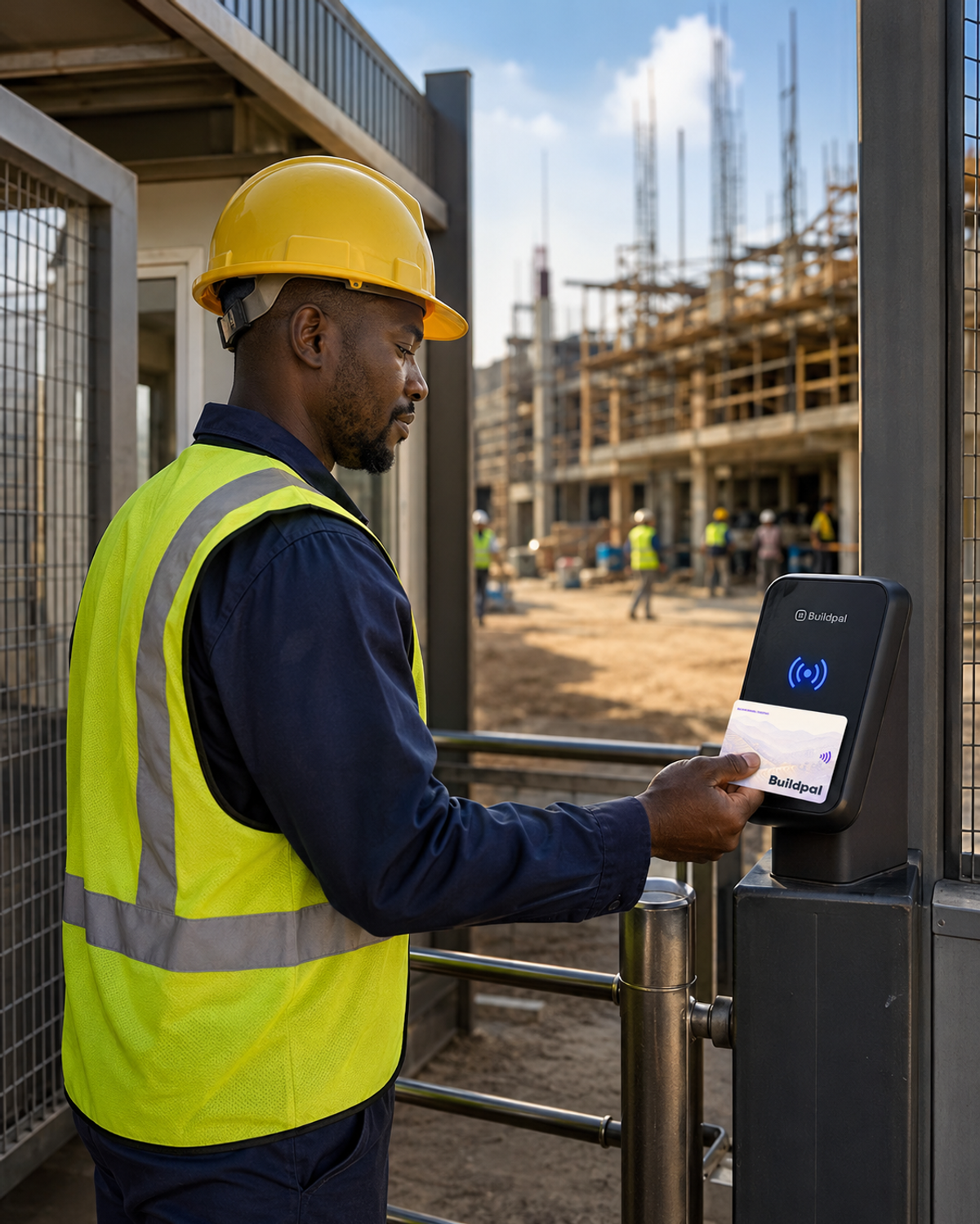
Say "formalization" on a building site and most people hear paperwork. More forms, more fees, more reasons for a job to slow down. It's a fair reaction. For years, formal work has mostly meant a cost that somebody else decided to add.
We think that's the wrong way round. Done well, formal work is something both sides of a site gain from, and the paperwork is the smallest part of it.
Why does formal work feel like paperwork today?#
Because most of what gets called formalization is collection, not return. A contractor fills in a register for an inspector. A worker hands over a copy of an ID and never sees it again. Nobody on site gets anything back, so the whole process feels like a tax on time.
The records that do exist are scattered: a notebook at the gate, a spreadsheet in the office, messages on somebody's phone. None of them follow the worker to the next site, and none of them settle an argument.
What do workers gain from a formal record?#
The short answer is leverage. A record that a worker owns, and that other contractors can trust, changes what that worker can ask for.
- A record they own. Verified identity, trade and skills, certifications and work history in one profile, with or without a smartphone.
- Published rates. Every trade has a published base rate above the statutory minimum, plus a premium as a worker becomes more proven.
- A reputation that travels. Reliable attendance on one site counts on the next one.
The first time I didn't have to explain who I was on a new site, I understood what the card was for.
What do contractors gain?#
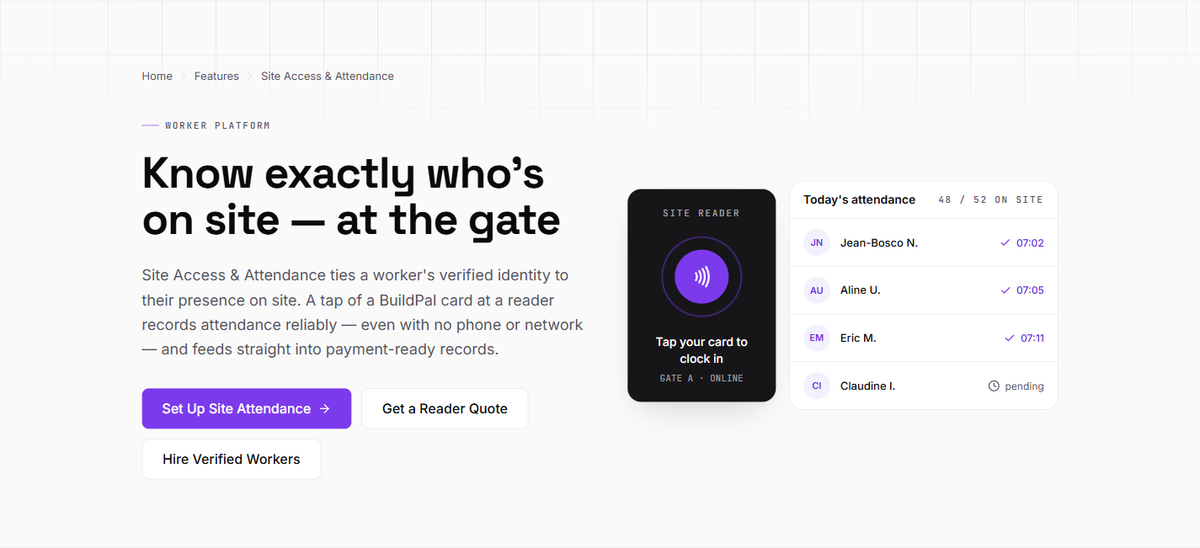
Speed and fewer disputes. When a contractor raises a request, the work is offered to verified workers who meet it, so the first day starts with people whose identity and trade are already checked. At the end of the week, pay is calculated from recorded attendance rather than from memory.
There's a quieter gain too. A contractor with clean records is easier to pay, easier to insure and easier to hire for the next project.
Where does it start?#
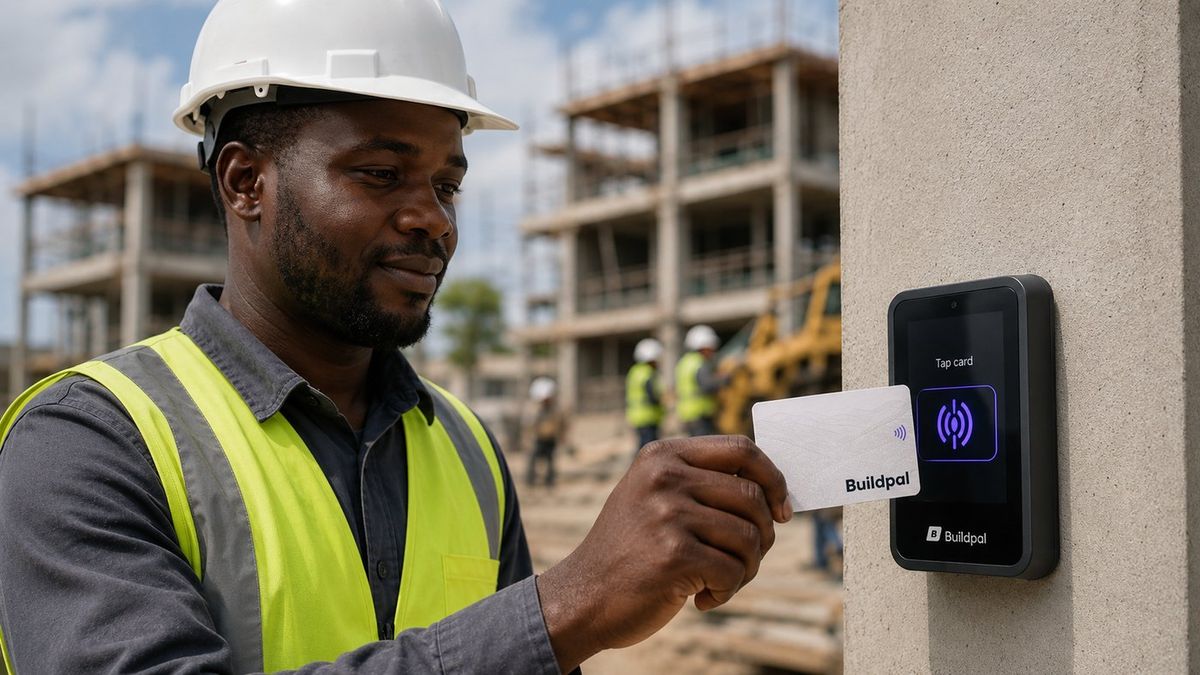
Small. One site, one gate reader, one crew that taps in and out for a few weeks. Once the first payday runs from recorded attendance, the value is easier to see than to explain.

Product, field operations and engineering at Buildpal, writing about what we learn building a verified workforce for construction in Rwanda.
Comments (0)
No comments yet. Start the conversation.